What Can Denver Learn from Berlin?
Reflections from the 2026 Urban Exploration Program Hosted by the Downtown Denver Partnership
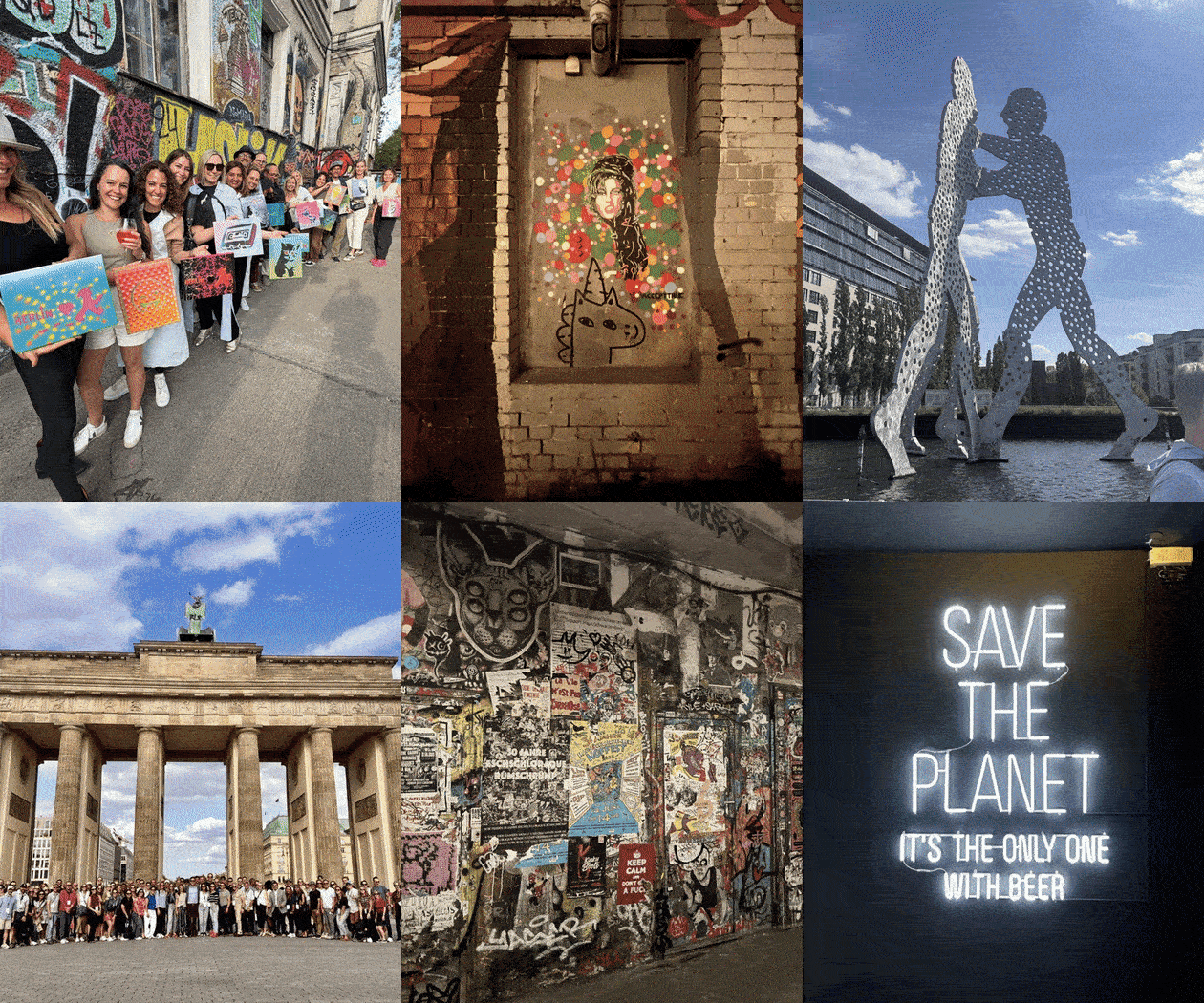
This year, the Downtown Denver Partnership’s Urban Exploration program brought together civic, business, and nonprofit leaders for a trip to Berlin, a city that has transformed decades of division into a model for neighborhood vitality, cultural identity, and urban innovation.
As Co-Chair of the Urban Exploration program, NINE dot ARTS CEO Martha McGee joined Market Lead Mary Gangel and fellow Denver leaders to explore how Berlin approaches placemaking, housing, public space, and culture. While Denver’s future will be its own, the trip offered valuable ideas for building a resilient, people-centered city.
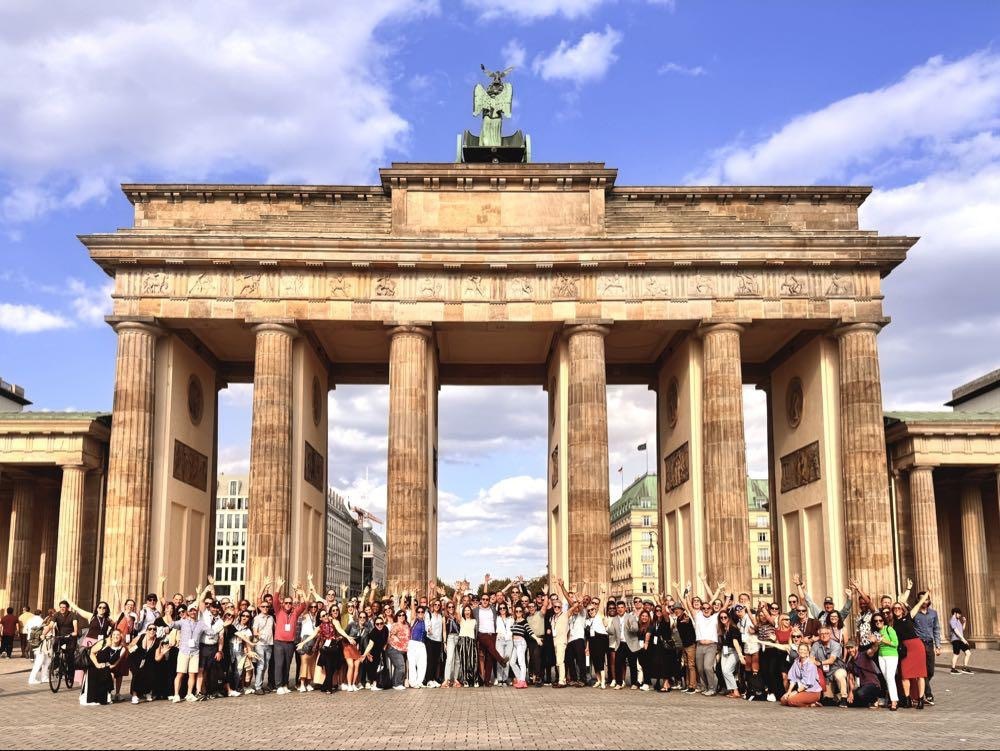
Urban Exploration participants at The Brandenburg Gate, a historic 18th-century neoclassical monument
Capturing Neighborhood Character
Berlin is a multi-centered city made up of distinct neighborhoods or “villages,” each with its own character, public spaces, housing, transit connections, and cultural identity. Rather than relying on a single downtown, every neighborhood functions as a complete community.
For Denver, that sparked an important question: How might we continue strengthening districts like Downtown, Santa Fe Yards, Burnham Yards, Ball Arena, National Western Center, Colfax, and Park Hill so each develops an authentic identity while remaining connected as part of one city?
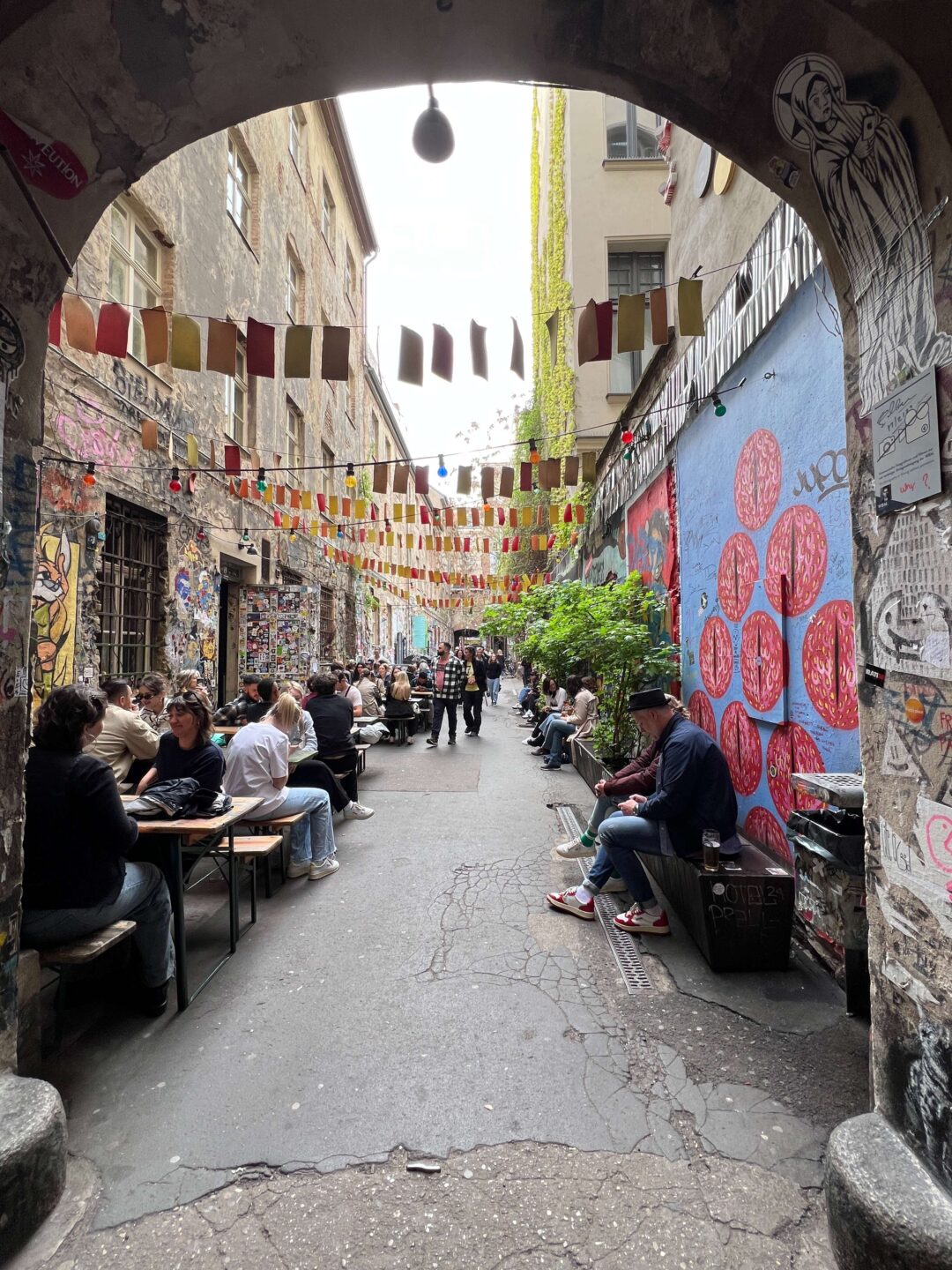
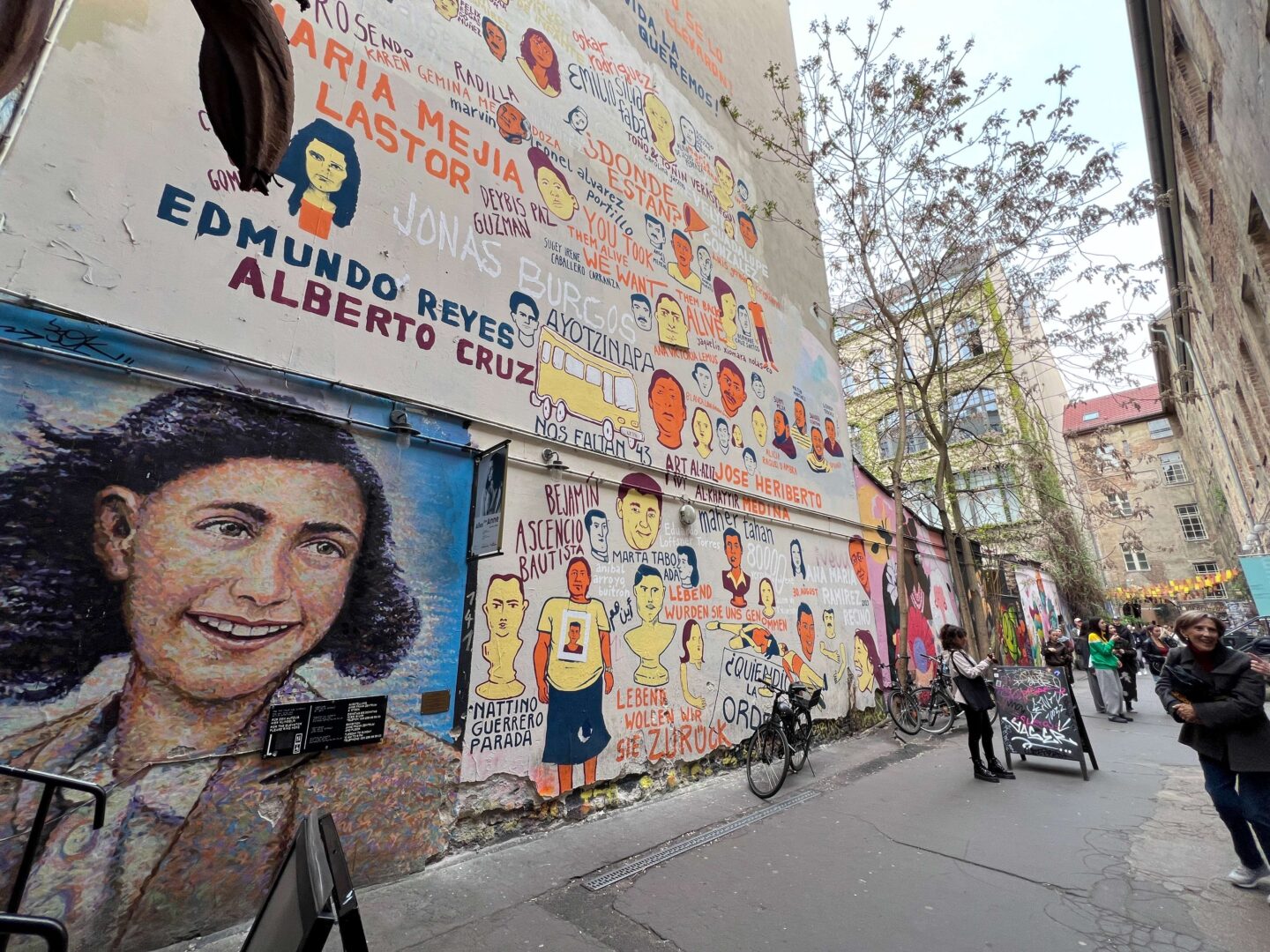
Alleyways at Hackesche Höfe
Success Isn’t Measured by Economics Alone
Berlin evaluates projects through three lenses: economic, cultural, and social impact.
One standout example was ZK/U Center for Art and Urbanistics a nonprofit arts and cultural center housed in a former rail building. Supported through public funding, partnerships, and programming, the organization intentionally balances financial sustainability with community impact, measuring success through cultural participation and social connection as much as revenue.
It’s a reminder that thriving cities require investments that strengthen quality of life alongside economic growth.
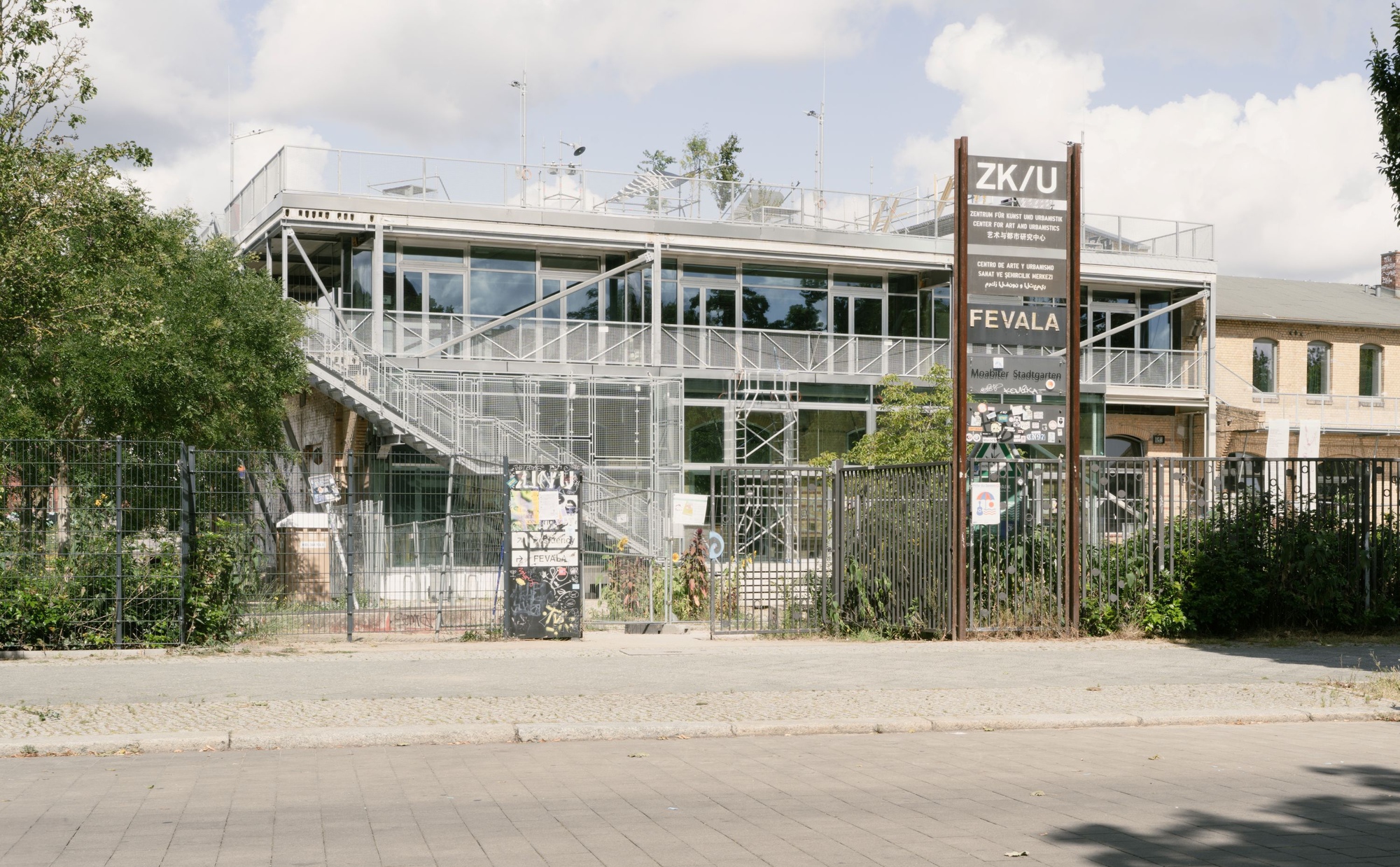
ZK/U Center for Art and Urbanistics
Public Space Belongs to Everyone
Former industrial sites have become cultural districts. Riverfronts prioritize people over cars. Parks embrace “urban wilding” rather than over-programming every square foot. Community stewardship, temporary uses, and creative experimentation have transformed overlooked places into destinations.
Places like RAW-Gelände, a former rail yard turned arts district, and Holzmarkt, a community-driven creative village along the Spree River, show how adaptive reuse and flexible public policy can create vibrant places without sacrificing authenticity.
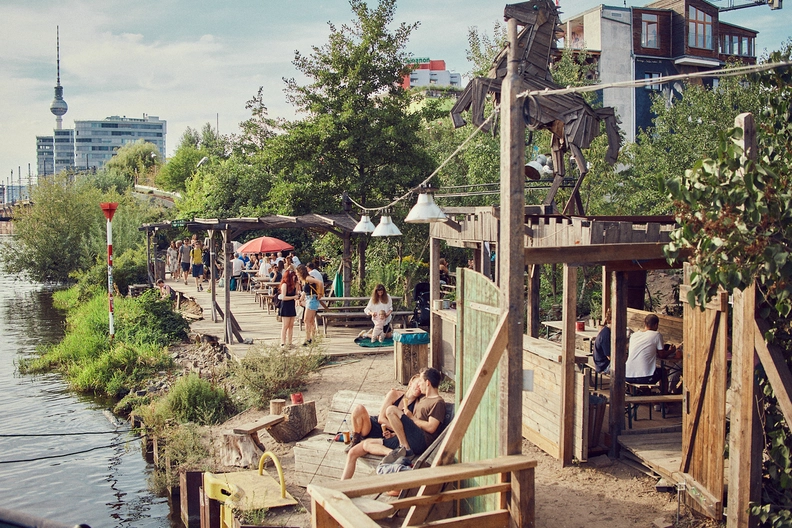
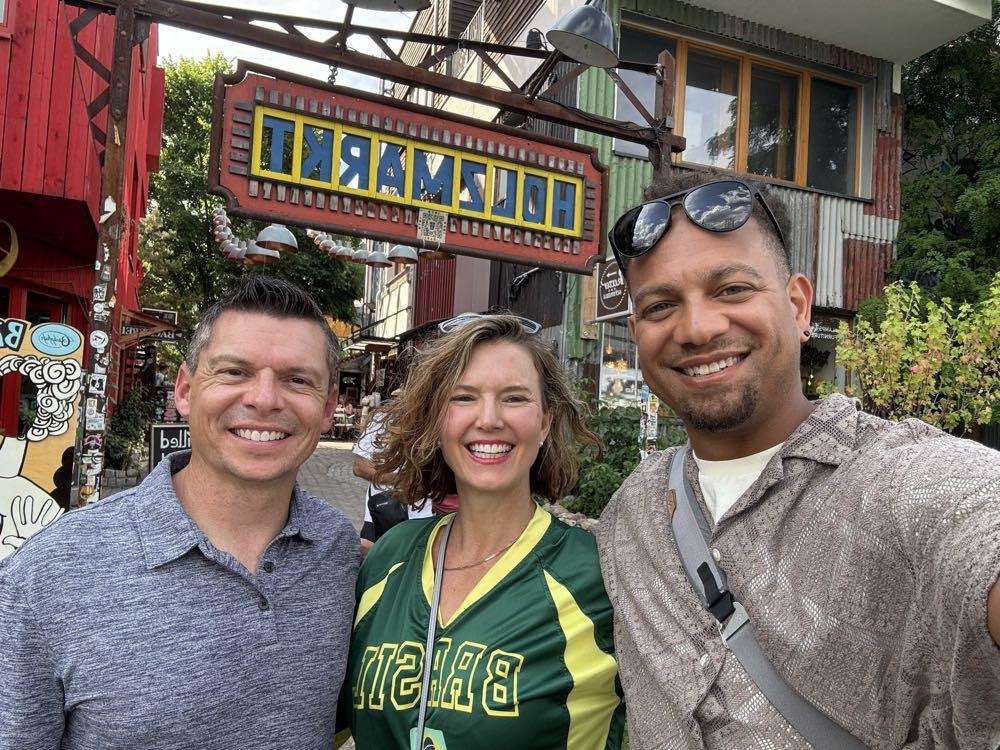
Holzmarkt
Public Art Is Woven into Everyday Life
In Berlin, public art is part of the city’s infrastructure.
At RAW-Gelände, industrial buildings now serve as canvases for murals, galleries, performance spaces, and independent businesses. The delegation even joined local artists for a spray-paint workshop to create their own street art, experiencing firsthand how creative expression is embedded in everyday life.
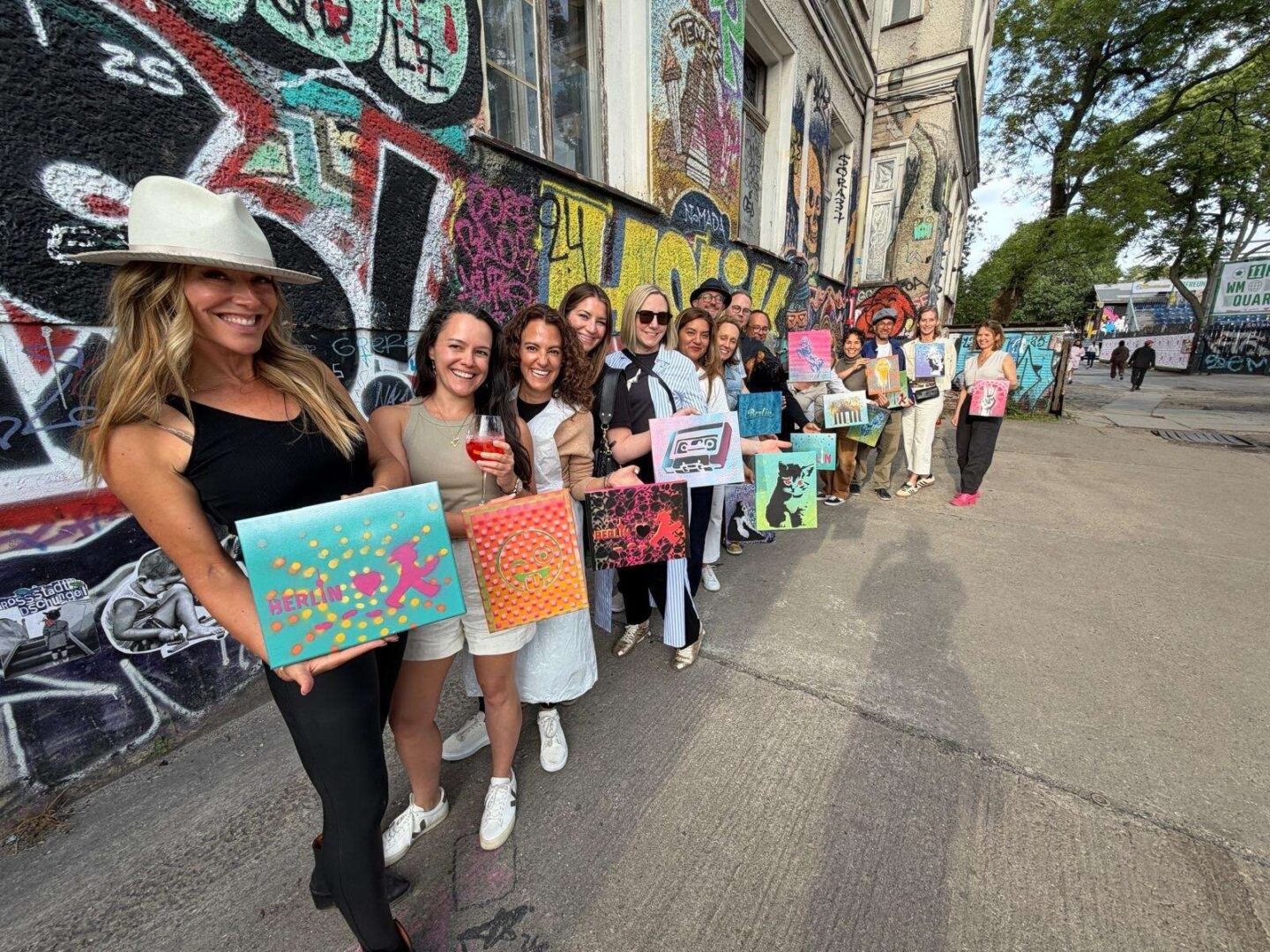
Spray painting art activation with local artists at RAW-Gelände
Holzmarkt and Hackesche Höfe further demonstrated how art, design, nightlife, and public gathering spaces work together to create neighborhoods that feel alive and distinctly local.
One of the most memorable stops was the East Side Gallery, where a 1.3-kilometer stretch of the former Berlin Wall has become the world’s longest open-air gallery. What was once a symbol of division is now a canvas for artists from around the world, demonstrating how cities can transform difficult histories into places of creativity and connection. In a fitting surprise, the delegation discovered a mural by Denver artist Mary Mackey among the internationally recognized works!
The group also visited the Kaiser Wilhelm Memorial Church, where the bomb-damaged spire has been intentionally preserved alongside a contemporary sanctuary. Rather than erase the scars of war, Berlin chose to build around them, showing how art, architecture, and preservation can acknowledge history while looking toward the future.
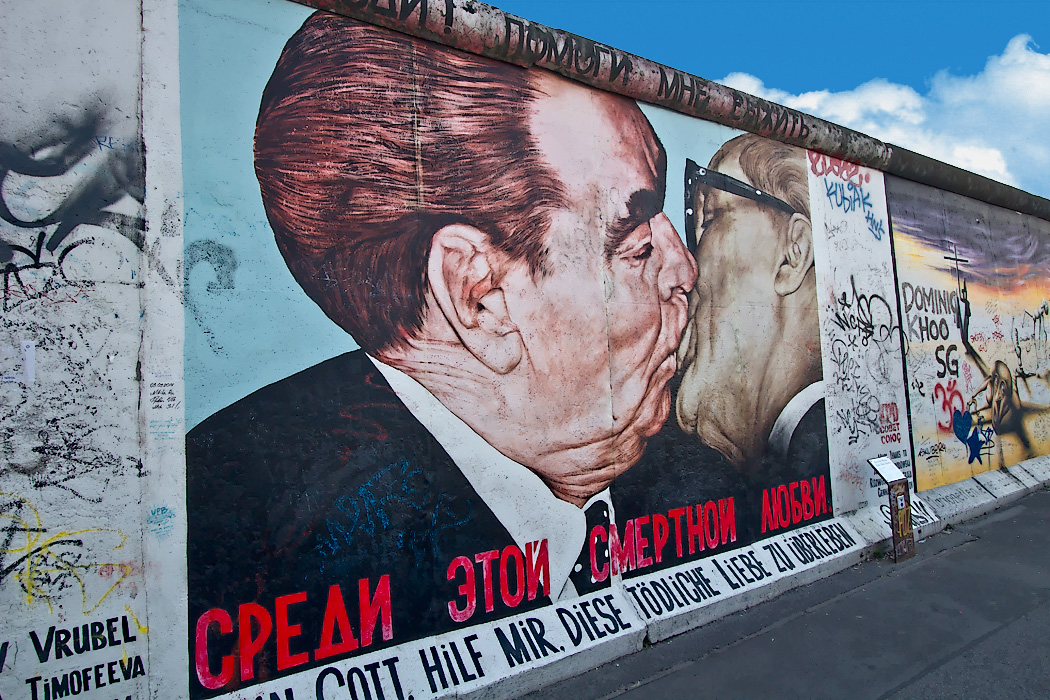
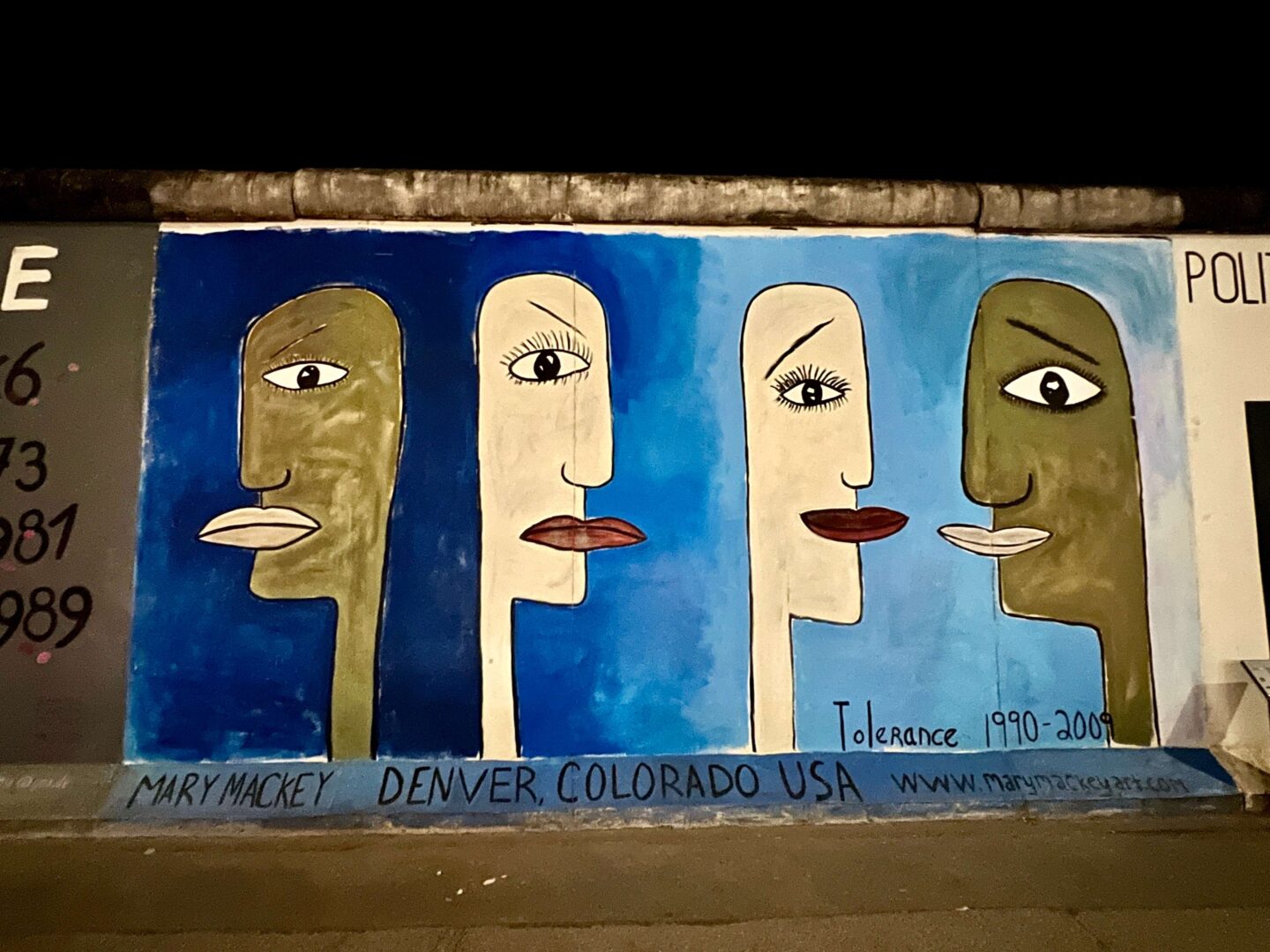
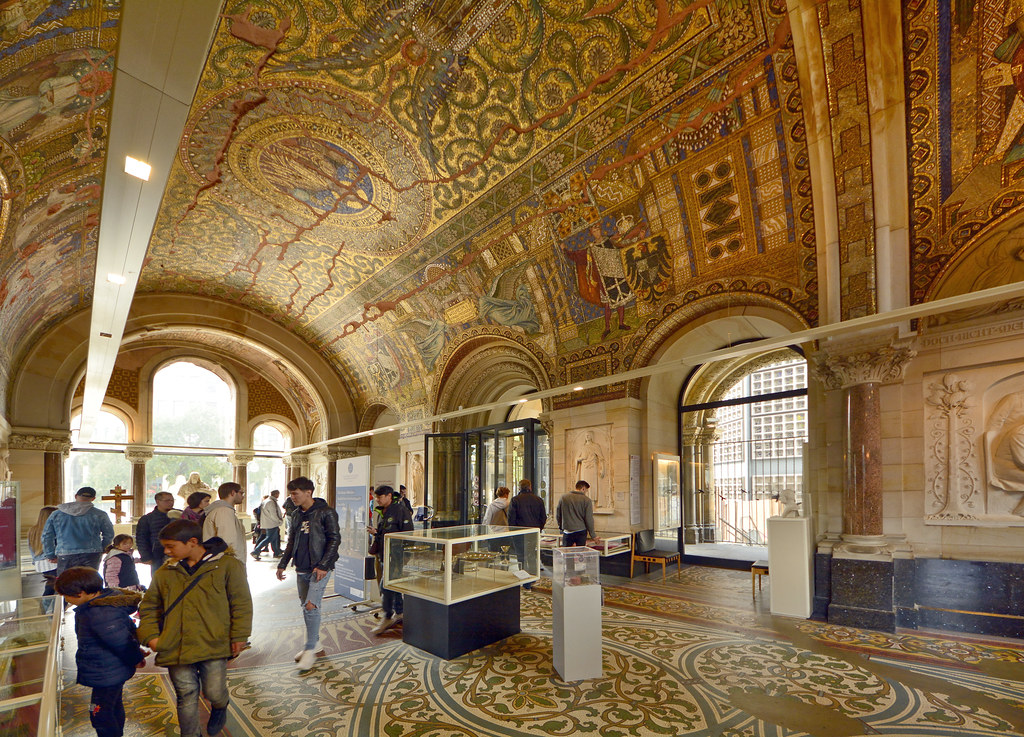
Left to Right: East Side Gallery, Mary Mackey Mural, Kaiser Wilhelm Memorial Church
Storytelling Creates Stronger Places
Berlin embraces difficult chapters of its history rather than hiding them. Memorials, public art, and the built environment make remembrance part of everyday life. From remnants of the Berlin Wall to the Stolpersteine, small brass plaques honoring victims of the Holocaust, history is encountered naturally as people move through the city.
These interventions invite reflection, dialogue, and understanding. They remind us that meaningful public spaces do more than celebrate success. They also create room for communities to remember, heal, and learn.
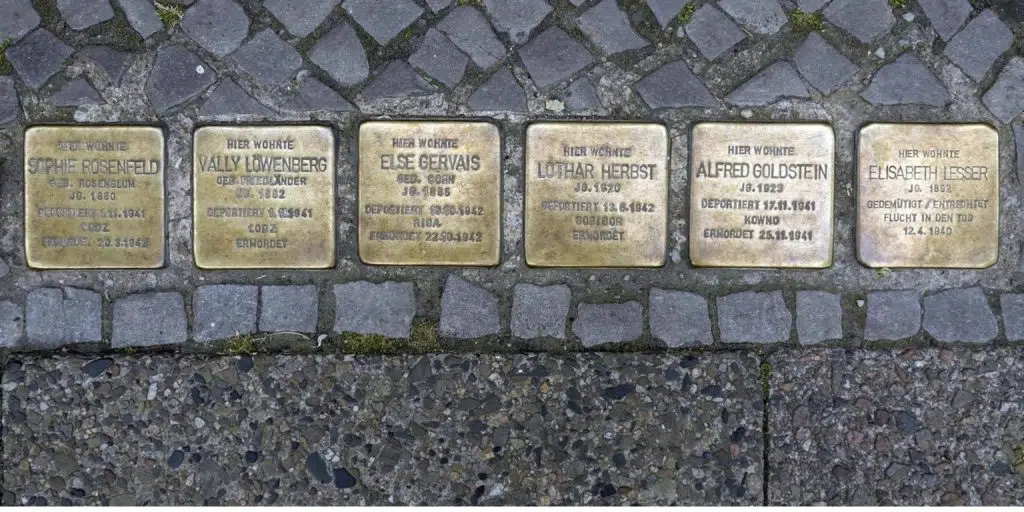
The Stolpersteine (“Stumbling Stones”) project by artist Gunter Demnig
Inspiration for Denver
Urban Exploration isn’t about copying another city. It’s about discovering ideas that can be thoughtfully adapted at home.
Berlin showed that great cities are built through collaboration, neighborhood identity, bold design, authentic storytelling, and a long-term commitment to public life. As Denver continues implementing the Downtown Area Plan and investing in emerging districts, these lessons offer inspiration for creating places that are economically successful, culturally rich, socially connected, and uniquely Denver.